
Homes today are often shaped by speed.
Furniture arrives flat-packed and temporary. Decor follows trends that change as quickly as seasons. Many spaces end up feeling more like staged environments than places that evolve with the people living in them.
A slow home offers a different approach.
It is not defined by minimalism or a specific aesthetic, but by the intention behind what is brought into the space. It is a shift from accumulation to consideration.
The idea of “buying once, buying well”
At the centre of a slow home is a simple principle: buy less, but choose more carefully.
In practice, modern consumption often works in cycles. Items are purchased quickly, used briefly, then replaced when they wear out or lose appeal. Over time, this pattern creates both material waste and a sense of disposability around everyday objects.
Choosing differently interrupts that cycle.
It means placing more value on durability, longevity, and design that remains relevant beyond immediate trends. It also means accepting that fewer, better-chosen items often create a more stable environment than frequent replacement ever could.
Living with intention, not excess
Curating a home is less about following rules and more about awareness.
Before bringing something new into a space, it helps to slow the decision slightly. Not to overthink it, but to notice it.
Does it serve a real function in daily life.
Does it feel considered in how it is made.
Does it feel like something that will remain useful over time.
These questions are less about restriction and more about clarity. They naturally reduce unnecessary accumulation without needing strict minimalism.
Objects that carry attention
One of the clearest differences in a slow home is the type of objects within it.
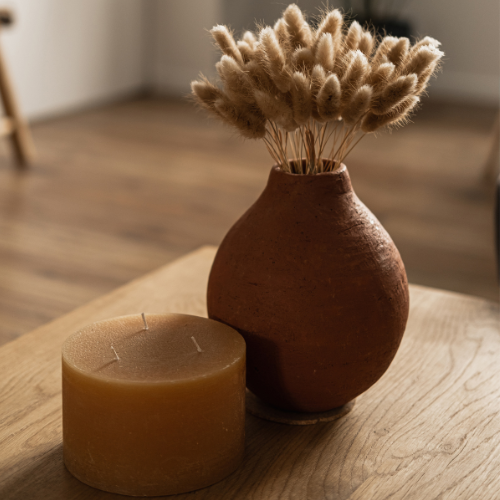
Handmade or small-batch pieces often carry visible signs of their making. A slight variation in glaze, the texture of natural materials, or the weight of something shaped by hand rather than mass-produced at scale.
These details are not decorative. They are evidence of process.
Even simple, well-made objects can create the same effect. What matters is not rarity, but the sense that attention was given when something was made.
Rooms shaped by use, not trends
A slow home does not need to be designed all at once. It develops gradually, shaped by how each space is actually used.
In kitchens, this might mean choosing materials that last through daily use rather than replacing items frequently. In living spaces, it often means selecting fewer, more durable pieces that support rest rather than constant updating. In bedrooms, it tends to involve reducing unnecessary stimulation and focusing on comfort and recovery.
Each space becomes less about appearance and more about function over time.
Care as part of ownership
In a culture built around replacement, maintenance is often overlooked.
In a slower approach, caring for what you already own becomes part of the relationship with it. Repairing, cleaning, and maintaining items extends their life and reduces the need for constant renewal.
This is not about idealising upkeep, but recognising that longevity is often created through continued use and care, not constant replacement.
A slower way of living with things
A slow home is not built quickly, and it does not need to be finished.
It forms over time through repeated decisions that favour longevity over immediacy, and intention over impulse.
The result is not a perfectly styled space, but a more stable one. A place shaped by use, familiarity, and continuity rather than constant change.
Closing note
Curating a slow home is ultimately about the relationship between people and the objects they live with.
When choices become more considered, the home becomes less reactive to external trends and more reflective of actual daily life.
Not perfect. Not fixed. Just more intentional in what stays and why it stays there.